
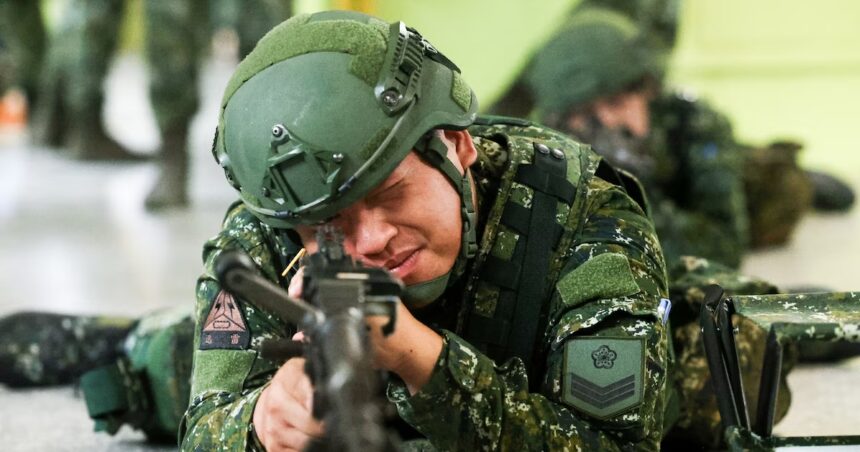
Recent publicly circulated footage depicting the training of military drone operators in #China offers insight into the accelerating evolution of modern defense technologies.
The sequences demonstrate high-precision maneuvering, ultra-low altitude flight, and navigation within constrained environments — operational capabilities that reflect the increasing sophistication of unmanned aerial systems (UAS).
Over the past decade, drone technology has transitioned from a complementary battlefield asset to a central pillar of modern military doctrine. Today’s systems integrate advanced sensors, real-time data processing, AI-assisted navigation, and autonomous or semi-autonomous decision-support frameworks.
This transformation signals a broader shift in defense strategy. Modern conflict environments are increasingly influenced by:
- Algorithm-driven targeting systems
- Sensor fusion and real-time surveillance
- Decentralized operational models
- Highly trained operators capable of managing complex autonomous platforms
China, like several major global powers, continues to invest significantly in next-generation unmanned systems, viewing them as essential to reconnaissance, strategic deterrence, and tactical adaptability.
Importantly, the global expansion of autonomous drone capabilities raises wider policy considerations. These include regulatory frameworks, ethical boundaries, escalation management, and the future architecture of international security.
As military technology advances, the conversation extends beyond hardware performance. It encompasses geopolitical stability, technological governance, and the evolving nature of strategic balance.
The emergence of highly capable autonomous drone systems may not redefine conflict overnight — but their cumulative impact on global defense dynamics is increasingly evident.
Leave a Reply